
ESD
PEZZOL is the ideal partner in workplaces sensitive to electricity. For people working in the field of microelectronics or high-frequency technology, in addition to absolute cleanliness, it is essential to protect materials and work tools from electrostatic charges. This is particularly important in semiconductor processing, the automotive industry, physical research laboratories, and the biomedical sector. This is why experienced technicians and engineers trust PEZZOL ESD safety shoes.
ESD = Electrostatic Discharge
PEZZOL ESD safety shoes ensure a continuous and undetectable discharge for the wearer (note: the ESD range does not provide insulating effects!). What visually distinguishes this feature on PEZZOL work footwear is the ESD symbol: circular, yellow with a hand inside a black triangle.

Use block text to give your customers insight into your brand. Select impactful text that relates to your brand and story.
Why does the human body become electrically charged?
The accumulation of electrostatic charges is a physical phenomenon related to frictional forces. This phenomenon, present in everyday life, can be observed through simple experiments: for example, if we rub a balloon on a fabric and bring it close to our hair, the hair 'stands up.' This situation is similar to the rubbing of synthetic fibers in clothing against a car seat, where the charges remain on the driver since no discharge can occur with the car - it acts as a Faraday cage, as the rubber tires isolate the conductive structure of the car from the ground. This creates a voltage difference between the driver and the environment that increases with friction. Only upon exiting the car does the driver become 'grounded' when touching the car's metal and the road, and therefore the accumulated voltage is discharged quickly and violently. This phenomenon is similar to that of a lightning strike hitting a building or a tree, but the values of the discharged voltage will be different. Lightning can cause severe damage, as occurs during thunderstorms, where small water droplets and ice crystals are lifted upward by thermal changes. The particles rub against each other and exchange charge in the form of electrons. When the voltage in the cloud becomes too high, it discharges through the air to the ground. The known form of this electrical discharge is lightning.

Similarly, the human body becomes 'charged' when we walk or when, wearing clothes made of synthetic fibers, we stand up from a seated position: just like clouds, these charges are accumulated rapidly. These discharges, due to their potential, can cause damage to microelectronic components, as in proportion to the size of the component, the energy of a discharge in a semiconductor is equivalent to the energy of a lightning strike on a tree.
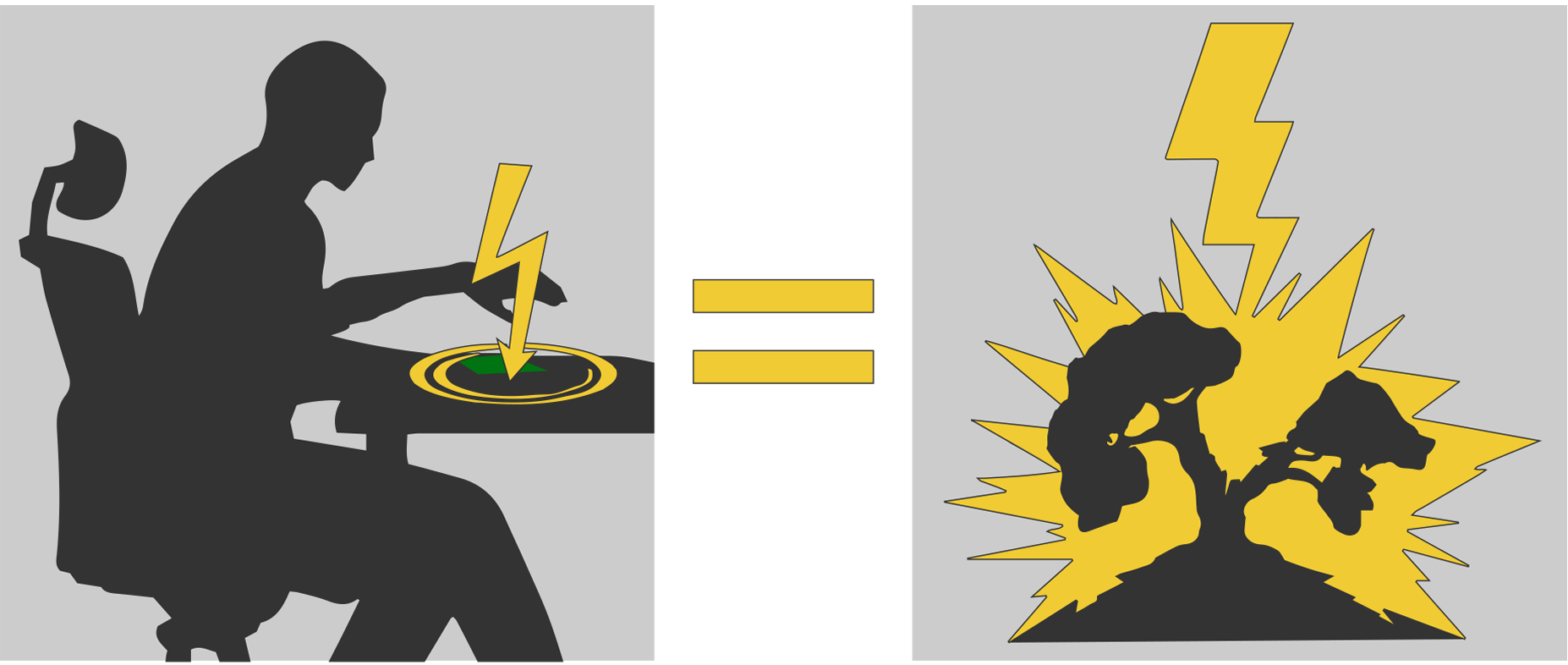
Formation of Electrostatic Charge
Physical Basics
Electric Charge - Charge Carriers
Bohr's atomic model describes the charge of the atomic nucleus as positive and the charge of electrons as negative. The positive elementary charge of the atomic nucleus is equal to the number of negative charges (electrons) orbiting around the nucleus, making the atom electrically balanced and, therefore, neutral outwardly.

Use block text to give your customers insight into your brand. Select impactful text that relates to your brand and story.
If an atom loses electrons, it will have an excess of positive charges compared to negative ones. Therefore, it will exert an electrical effect outward, attracting negative charges.

Use block text to give your customers insight into your brand. Select impactful text that relates to your brand and story.
If an atom gains electrons, it becomes negatively charged and attracts positive charges.

Use block text to give your customers insight into your brand. Select impactful text that relates to your brand and story.
Atoms or atomic groups that are positively or negatively charged are called ions.
Contact Charge
To electrically charge a body (whether human or material), charges must be separated. This requires an initial contact between the bodies, with the accumulation and distribution of charges, followed by the subsequent separation of the charged materials. The contact of the material surfaces must be such that electrons can transfer from one material to another, generating two charged bodies. The determining parameters for the potential value of the remaining charge are the rate of separation and the intrinsic properties of the material.
In addition, secondary characteristics (though no less important) include: surface roughness, surface geometry, and humidity, all of which affect the remaining charge value. Other variables include surface resistance, which depends on humidity and contamination from foreign substances.
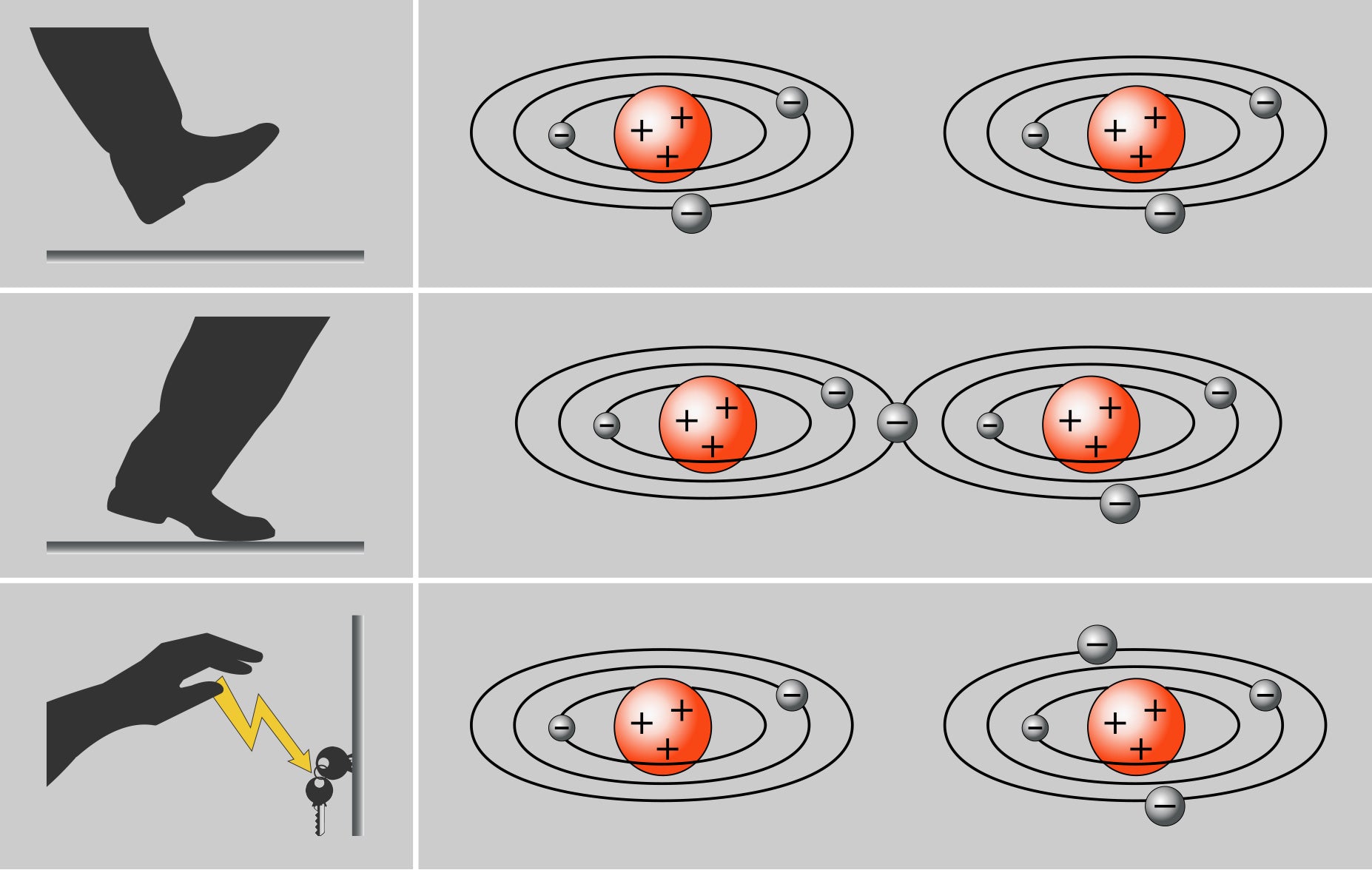
Body Charge
The human body's charge occurs when walking, through friction with clothing, when changing clothes, through movements at the workplace, when standing up from chairs, or when handling plastics.
Influencing Factors
The ideal conditions to avoid electrostatic charging are dust-free environments with a neutral climate and low humidity. These and other factors can have a significant impact on the performance of PEZZOL ESD shoes. It is always necessary to use only certified insoles along with PEZZOL safety shoes to ensure maximum protection.
It should also be noted that any external modifications to the shoe (such as inserts, bending, dirt, and moisture) can negatively affect the protective function of the shoes, so ESD shoe checks are required to ensure that their antistatic properties are maintained.
- Socks, orthopedic insoles, or regular insoles should not negatively impact electrical resistance.
- Dust
- Climate - Temperature
- Climate - Humidity
- Type of flooring (epoxy - magnesite - etc.)
Warnings
A local inspection by a safety expert is strongly recommended.
Caution
Antistatic and ESD shoes do not offer guaranteed protection against electric shocks. Additionally, factors such as: indoor climate, cleanliness, type of flooring, intrinsic electrical resistance of components and equipment used in the workplace, and the wear of the footwear can modify the actual antistatic conditions. Therefore, with PEZZOL ESD safety shoes, it is recommended to work in regular climatic conditions, in strictly clean environments, and with optimized ESD workstations to ensure complete safety against the formation of unwanted discharges.
Scientific tests show that most people are unaware of the effects of a spontaneous discharge in technical areas: while 3000 volts of voltage on the body will result in a fatal electric shock, only 100 volts are required to damage a hard disk, and only 50 volts are enough to generate a spark that could ignite gas or very fine dust.
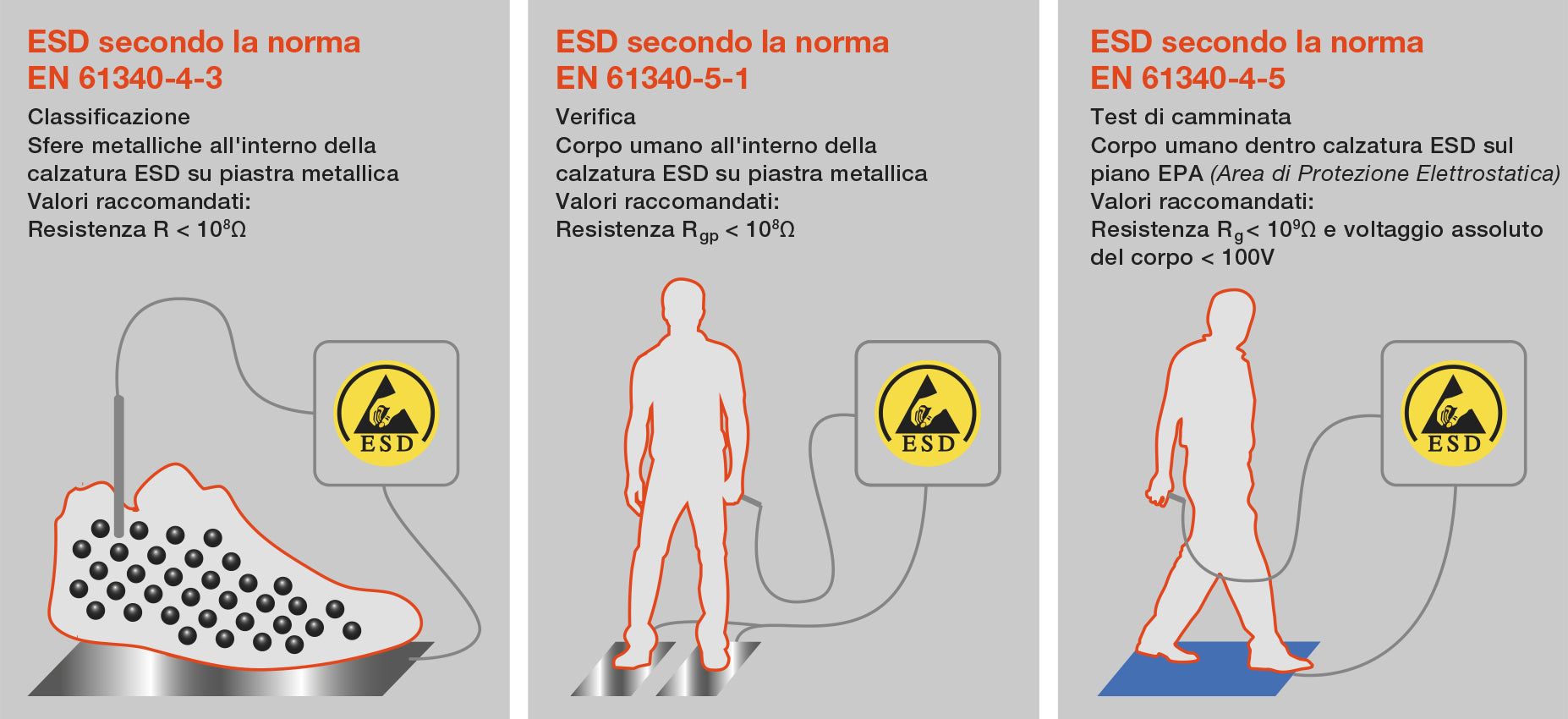
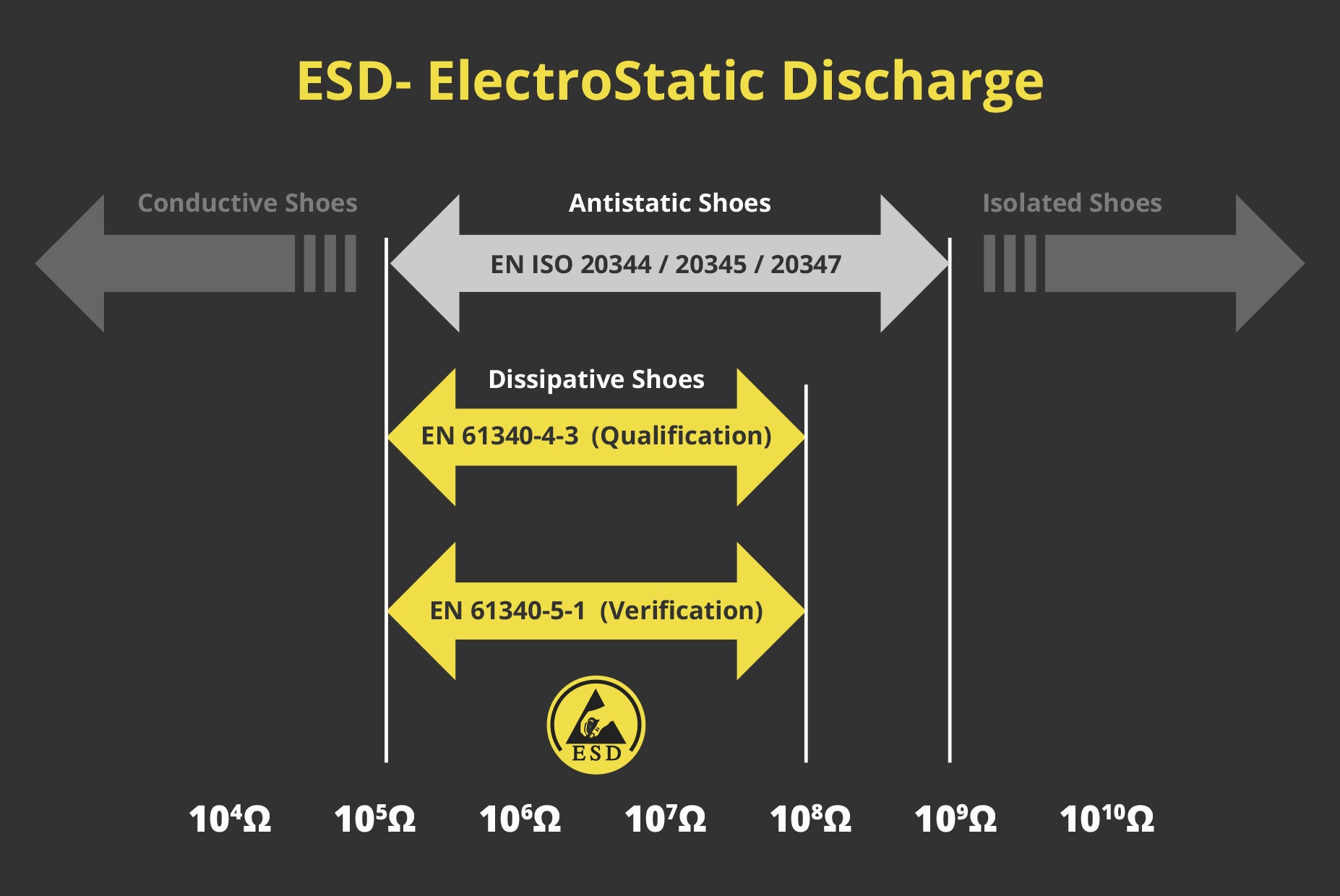
ESD Flooring
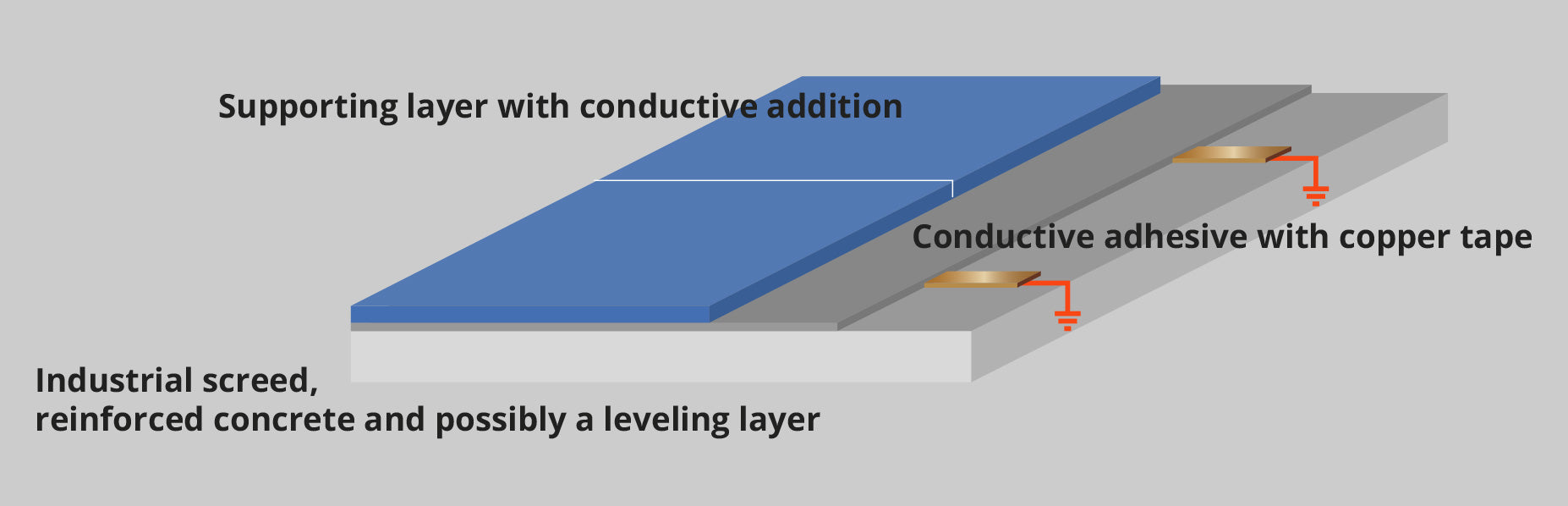
Dissipative footwear reduces electrostatic charge on normal floors, but safe protection is only guaranteed in relation to a conductive floor.
All flooring systems consist of a base coat layer, leveling compound, intermediate conductive layer, and top conductive layer. They primarily differ in the composition of the material of the top layer, the thickness of the layer, and the execution of the installation technology.
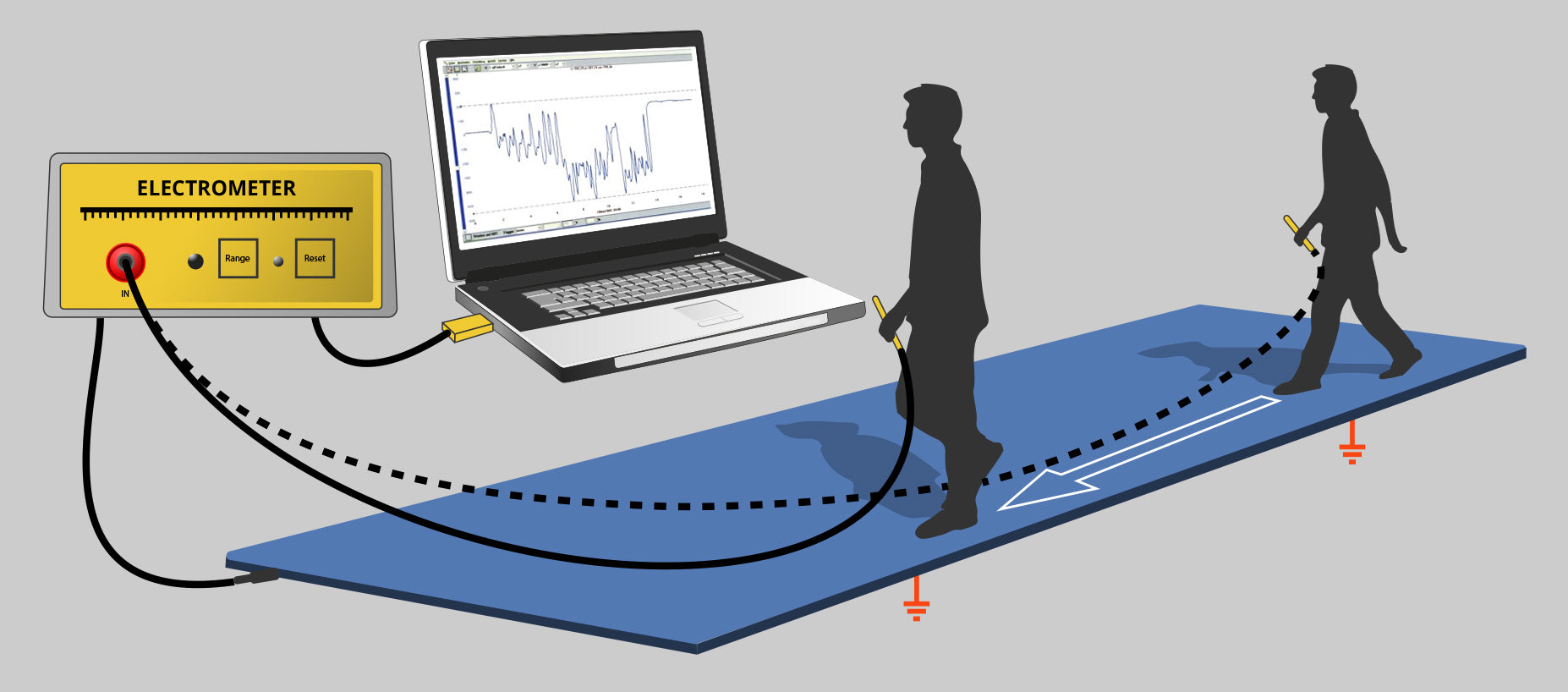
Dissipative footwear must also be tested in conjunction with the floor. If the voltage during alternating steps remains below 100 V <1 sec, the potential between the user and the floor can be derived (walking test according to ISO 61340-4-5).